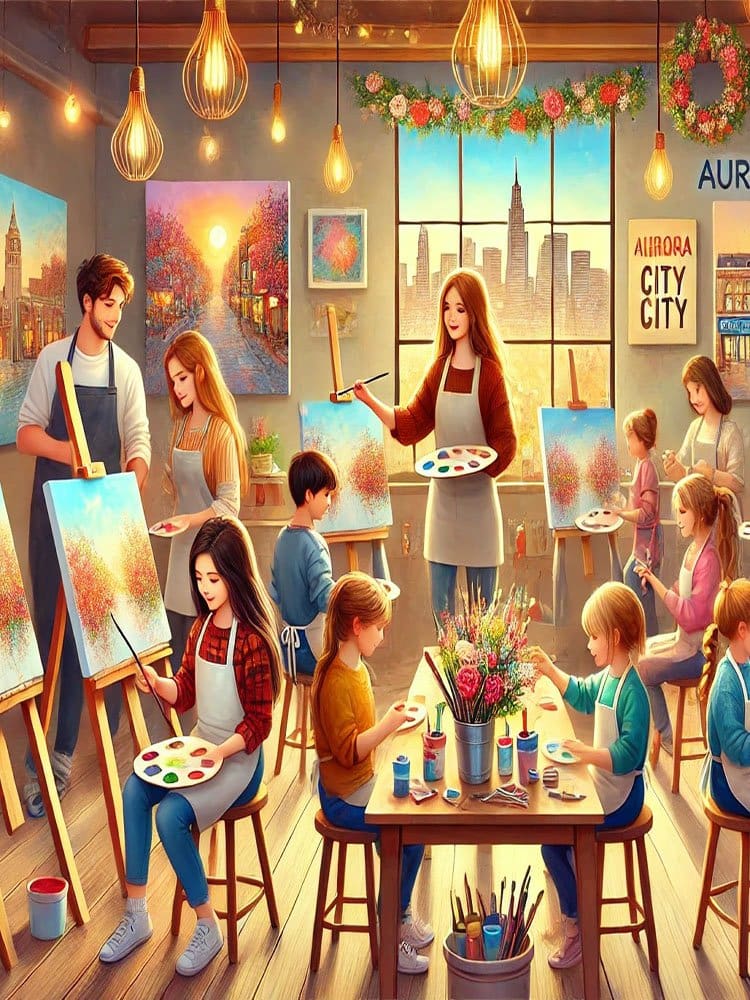
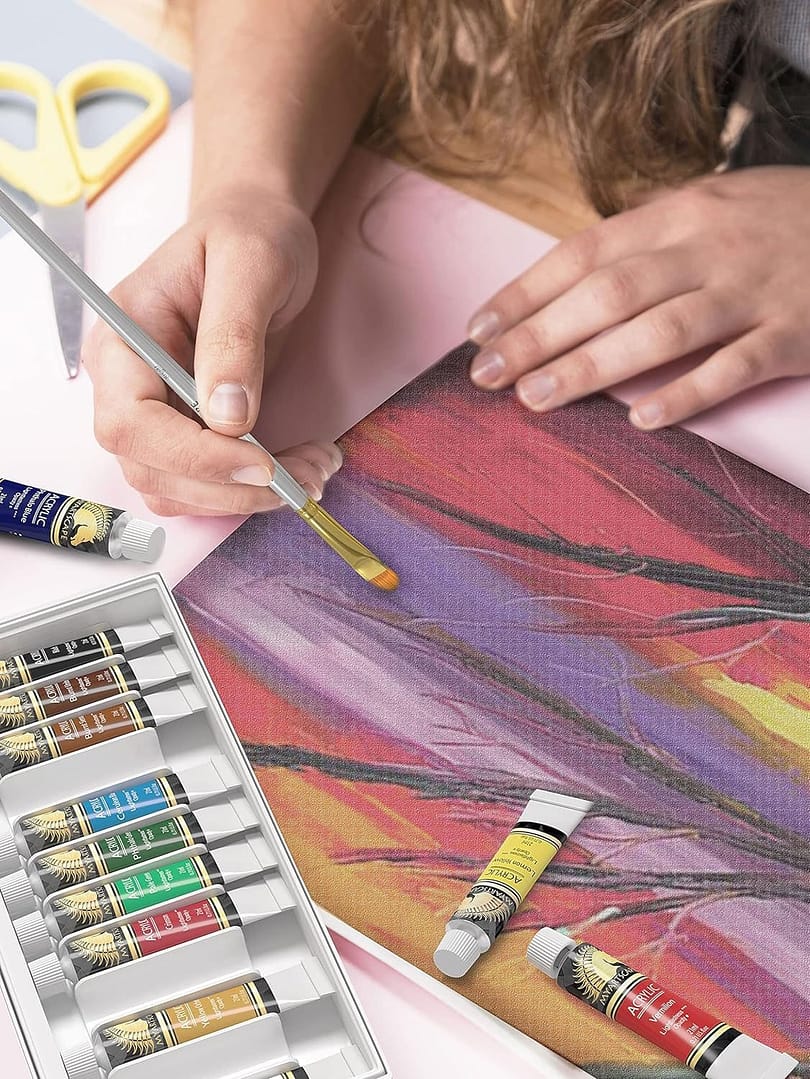
Oil painting is a timeless medium that allows artists to create rich, textured compositions with remarkable depth. Whether you’re a beginner or a seasoned artist seeking refinement, enrolling in a Painting Class focused on oil painting can be a transformative experience.
Structured instruction guides students through essential techniques, from underpainting and glazing to impasto and scumbling. A well-rounded Painting Class teaches the science behind pigments, mediums, and drying times, ensuring artists understand how to manipulate oils for desired effects.
Beyond technique, these classes nurture artistic intuition. Through live demonstrations and personalized feedback, students develop their unique style while mastering classical and contemporary methods. The interplay of light and shadow, color harmony, and composition principles are explored in-depth, allowing artists to elevate their work to museum-quality standards.

Oil painting is one of the most versatile and rewarding forms of visual art. Its rich colors, slow drying time, expressive textures, and remarkable blending capabilities have attracted artists for centuries. However, mastering oil painting requires more than simply putting paint on a canvas. Artists need to understand materials, color relationships, composition, values, brushwork, layering, lighting, and surface preparation.
A well-structured Painting Class can make this learning process much easier. Instead of experimenting without direction, students can learn each concept through demonstrations, guided exercises, practice, and instructor feedback. This structured approach helps beginners avoid common mistakes while giving experienced artists opportunities to refine their techniques.
Oil painting also offers enormous creative freedom. Artists can pursue detailed realism, expressive impressionism, dramatic portraiture, atmospheric landscapes, still life, or abstract expression. The techniques may differ, but the fundamental principles remain important.
The following guide explores the essential skills, materials, techniques, and artistic principles that students can develop through a comprehensive Painting Class.

Oil painting has a long and influential history. Artists have used oil-based pigments for centuries because the medium provides exceptional depth, flexibility, and color richness. Unlike fast-drying media, oil paint remains workable for an extended period. This allows artists to blend colors, soften edges, modify shapes, and build sophisticated transitions.
For beginners, the slow drying time can initially feel challenging. Paint may remain wet for days, depending on the pigments, surface, thickness, and medium. However, this characteristic is also one of oil painting’s greatest advantages.
A professional Painting Class introduces students to this unique behavior before they begin advanced techniques. Understanding how oil paint behaves helps students work with the medium rather than against it.
Most successful oil paintings are developed through several stages. These stages can include:
Concept development
Reference selection
Composition planning
Surface preparation
Drawing or block-in
Underpainting
Establishing values
Color development
Refining forms
Adding details
Adjusting edges
Final highlights
Drying and finishing
A Painting Class can demonstrate each stage so students understand why one step should normally precede another.
Instead of attempting to finish the entire painting immediately, students learn to think in terms of large shapes, values, colors, and relationships.
Oil paint consists primarily of pigment suspended in an oil binder. This structure gives the medium its characteristic texture and working time.
Artists can manipulate oil paint in several ways. They can apply it thinly, spread it broadly, blend it smoothly, or build it into thick textured passages.
This flexibility makes oil painting suitable for many artistic styles.
One of the most important skills in oil painting is observation. Artists must learn to see relationships rather than simply identify objects.
For example, instead of thinking, “This is a red apple,” an artist learns to observe:
The overall shape
The light direction
The local color
The shadow pattern
The reflected light
The brightest highlight
The darkest value
The surrounding colors
The edges between forms
A structured Painting Class teaches students to translate these observations into visual decisions.
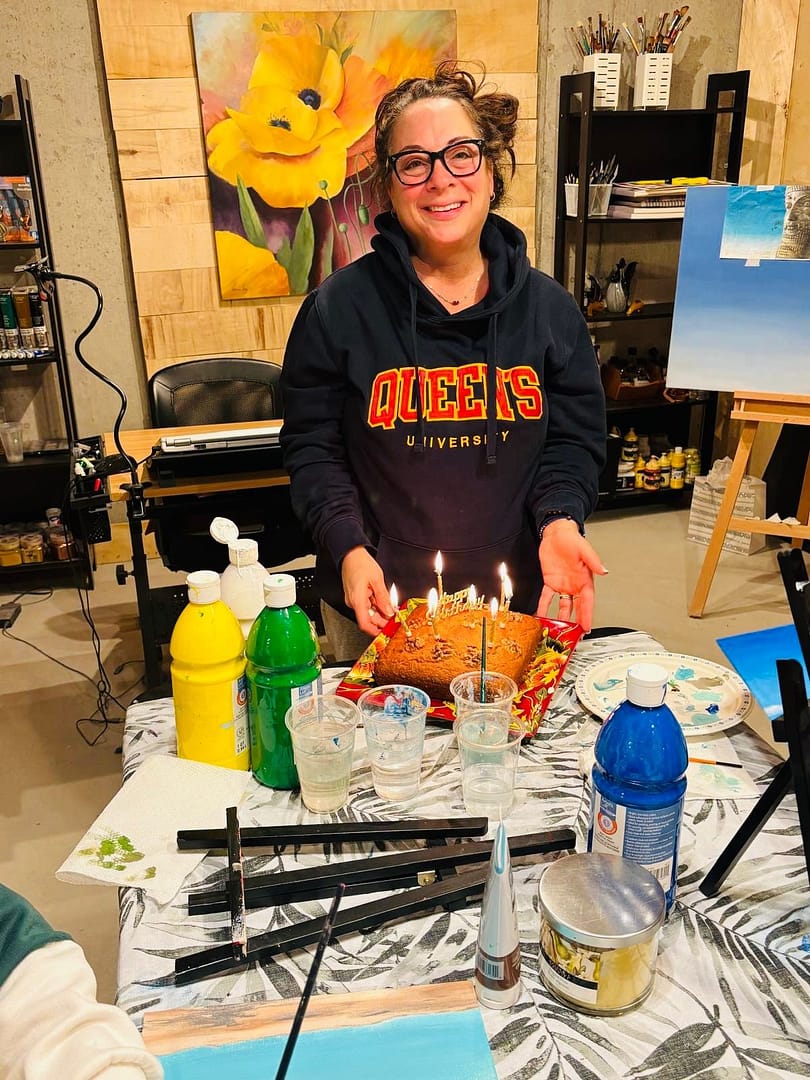
Good materials can make the painting process more predictable. However, beginners do not need every product available on the market. A carefully selected basic setup is usually enough to begin.
A Painting Class can help students understand which materials are essential and which supplies can be added later.
Oil paints are available in many qualities and price ranges. Student-grade paints are often suitable for practice, while professional-grade paints generally contain higher pigment concentrations and offer greater consistency.
A basic palette might include:
Titanium White
Yellow Ochre
Cadmium Yellow or a similar yellow
Cadmium Red or another strong red
Alizarin Crimson or a modern alternative
Ultramarine Blue
Phthalo Blue
Burnt Sienna
Raw Umber
Viridian or another green
Ivory Black
The exact palette can vary depending on the artist’s style.
A Painting Class often introduces students to limited palettes because they encourage careful color mixing.
Brush selection affects both application and appearance.
Common brush shapes include:
Round
Flat
Bright
Filbert
Fan
Detail brushes
Long-handled brushes
Natural bristle brushes can be useful for vigorous applications and textured work. Softer synthetic brushes can provide greater control for blending and detail.
Students should learn that the best brush is not necessarily the most expensive brush. The correct brush depends on the technique and stage of the painting.
A palette provides a surface for organizing and mixing colors. Traditional palettes may be made from wood, while disposable paper palettes offer convenience.
Color organization is important. Many artists arrange their colors consistently around the palette. This reduces confusion and speeds up the mixing process.
Oil paint can be applied to several prepared surfaces.
Common options include:
Stretched canvas
Canvas panels
Linen
Wooden panels
Primed paper
The surface must be properly prepared. Applying oil paint directly to an unsuitable surface can create adhesion and preservation problems.
A Painting Class should explain the difference between raw and properly primed surfaces.
Priming creates an appropriate foundation for painting. It can influence the surface texture, absorbency, and appearance of subsequent layers.
Some artists prefer smooth surfaces for detailed realism. Others prefer more textured surfaces for expressive brushwork.
Mediums can change the behavior of oil paint. They may affect flow, transparency, drying characteristics, and surface appearance.
Traditional materials include linseed oil and other drying oils. Modern mediums may provide additional control.
Solvents such as odorless mineral spirits can be used for certain cleaning and thinning applications. Proper ventilation and safe handling are important.
A responsible Painting Class teaches students how to use these materials safely rather than treating them as ordinary household liquids.
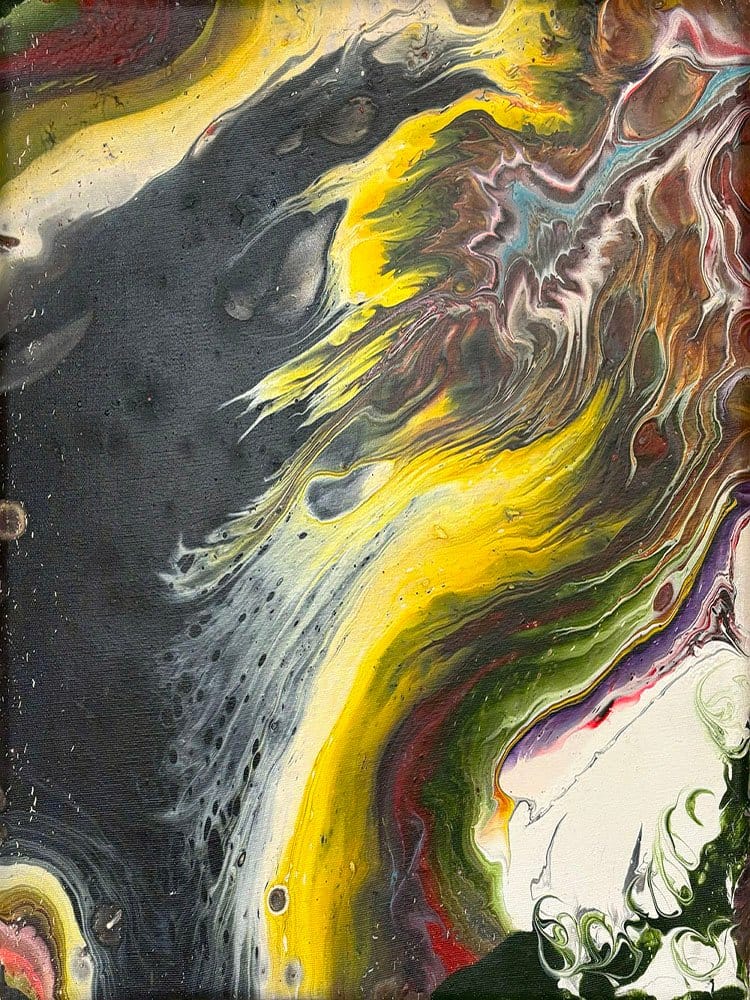
Preparation is often overlooked by beginners. Yet the foundation can strongly influence the final painting.
Before beginning, artists should consider:
Surface quality
Canvas tension
Priming
Composition
Orientation
Reference image
Lighting conditions
Many artists apply a transparent or semi-transparent tone before beginning the main painting.
A toned surface can reduce the distraction of bright white canvas. It can also help the artist judge values more effectively.
Warm earth tones are common for traditional paintings, while cooler tones can create different visual effects.
The drawing stage establishes proportions and placement.
Artists may use charcoal, thinned paint, pencil on suitable surfaces, or other methods.
A Painting Class can teach students how to simplify complex subjects into basic shapes before introducing color.

Oil painting becomes much easier when students understand a small number of fundamental techniques.
Underpainting establishes the basic structure of the image.
It can help determine:
Composition
Value structure
Major shapes
Light direction
Overall color temperature
Some artists use monochromatic underpaintings. Others establish a simplified version of the final color structure.
Blocking in involves placing large masses of color before adding detail.
The objective is not perfection. The artist focuses on the overall relationship between major shapes.
A common beginner mistake is starting with tiny details too early. A Painting Class teaches students to establish the large structure first.
Alla prima, or direct painting, involves completing the painting or major sections in relatively few sessions while the paint remains wet.
This approach encourages confident brushwork and careful observation.
It is particularly useful for portraits, still life, and landscape studies.
Layering allows artists to develop paintings gradually.
An initial layer may establish the general forms. Later layers can strengthen color, values, texture, and detail.
Layering requires an understanding of drying and paint consistency.
Glazing involves applying relatively transparent layers over an existing dried layer.
Glazes can modify color while allowing underlying layers to remain visible.
They can create:
Richer colors
Greater depth
Atmospheric effects
Subtle transitions
Optical complexity
A Painting Class can demonstrate glazing because the technique is difficult to understand from theory alone.
Scumbling uses a relatively thin application of opaque or semi-opaque paint over a dry layer.
The underlying color partially influences the visual result.
This technique can be useful for:
Atmospheric effects
Soft transitions
Hair
Clouds
Textured surfaces
Aging effects
Impasto involves applying paint thickly enough to create visible physical texture.
Artists can use brushes or palette knives to create raised passages.
Impasto is especially effective for expressive paintings where surface texture contributes to the visual experience.
Oil paint is particularly suitable for blending because it remains workable for an extended period.
However, excessive blending can destroy the clarity of color and form.
Students should learn when to blend and when to leave brushstrokes visible.
Edge control is one of the most advanced aspects of realistic oil painting.
Edges can be:
Hard
Soft
Lost
Broken
Hard edges attract attention. Soft edges can suggest distance or rounded forms. Lost edges can merge one shape into another.
A skilled artist controls edges intentionally.

The fat-over-lean principle is an important concept in traditional oil painting.
Lower layers are generally made leaner, while subsequent layers contain relatively more oil or medium.
This approach helps accommodate differences in flexibility between layers.
A Painting Class should explain this principle before students begin complex multi-layer paintings.
Ignoring proper layering practices can contribute to cracking or other long-term problems.
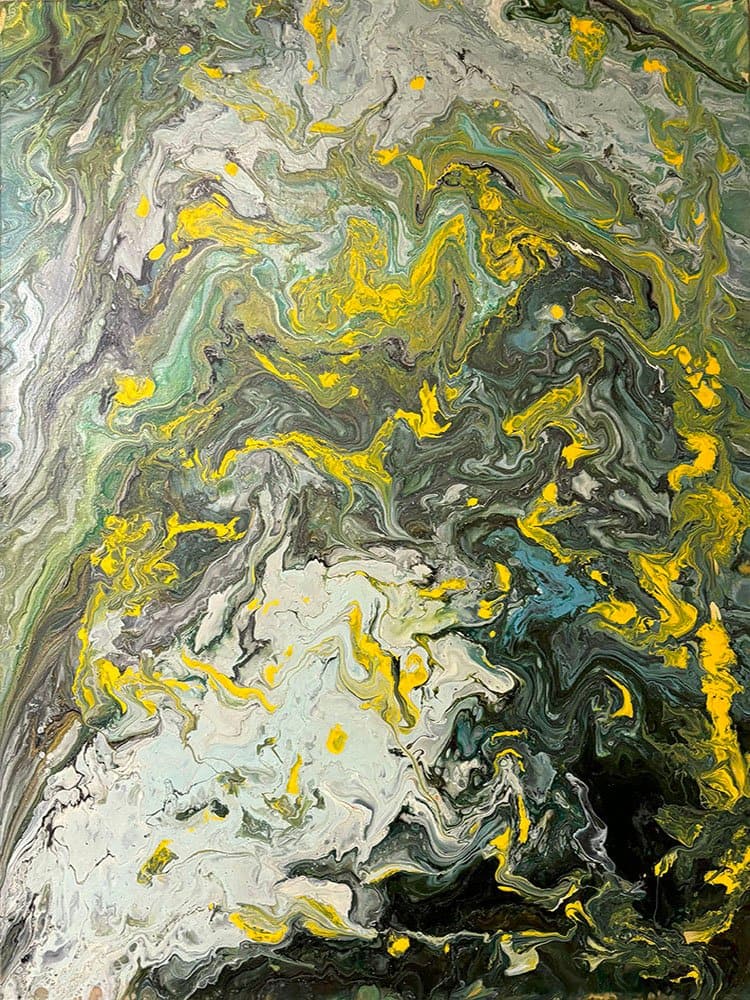
Color theory is central to successful painting.
Artists must understand not only individual colors but also how colors interact.
Traditional color theory identifies red, yellow, and blue as primary colors.
These colors can be combined to produce secondary colors.
However, modern color theory recognizes that practical pigment behavior can be more complicated than the traditional color-wheel model.
A Painting Class can demonstrate these differences through actual paint mixing.
Colors can appear warmer or cooler depending on their relationships.
For example, two reds may both appear red, but one can lean toward orange while another leans toward violet.
Learning these subtle differences improves color mixing.
Complementary colors occupy opposing positions on a traditional color wheel.
Examples include:
Red and green
Blue and orange
Yellow and violet
Placing complementary colors near one another can increase visual energy.
Mixing them, however, often reduces saturation.
Analogous colors sit close together on the color wheel.
They can create harmonious and cohesive paintings.
Saturation refers to the intensity or purity of a color.
Highly saturated colors can attract attention. Muted colors can create subtlety and atmospheric depth.
A sophisticated painting usually contains a deliberate balance between stronger and weaker colors.
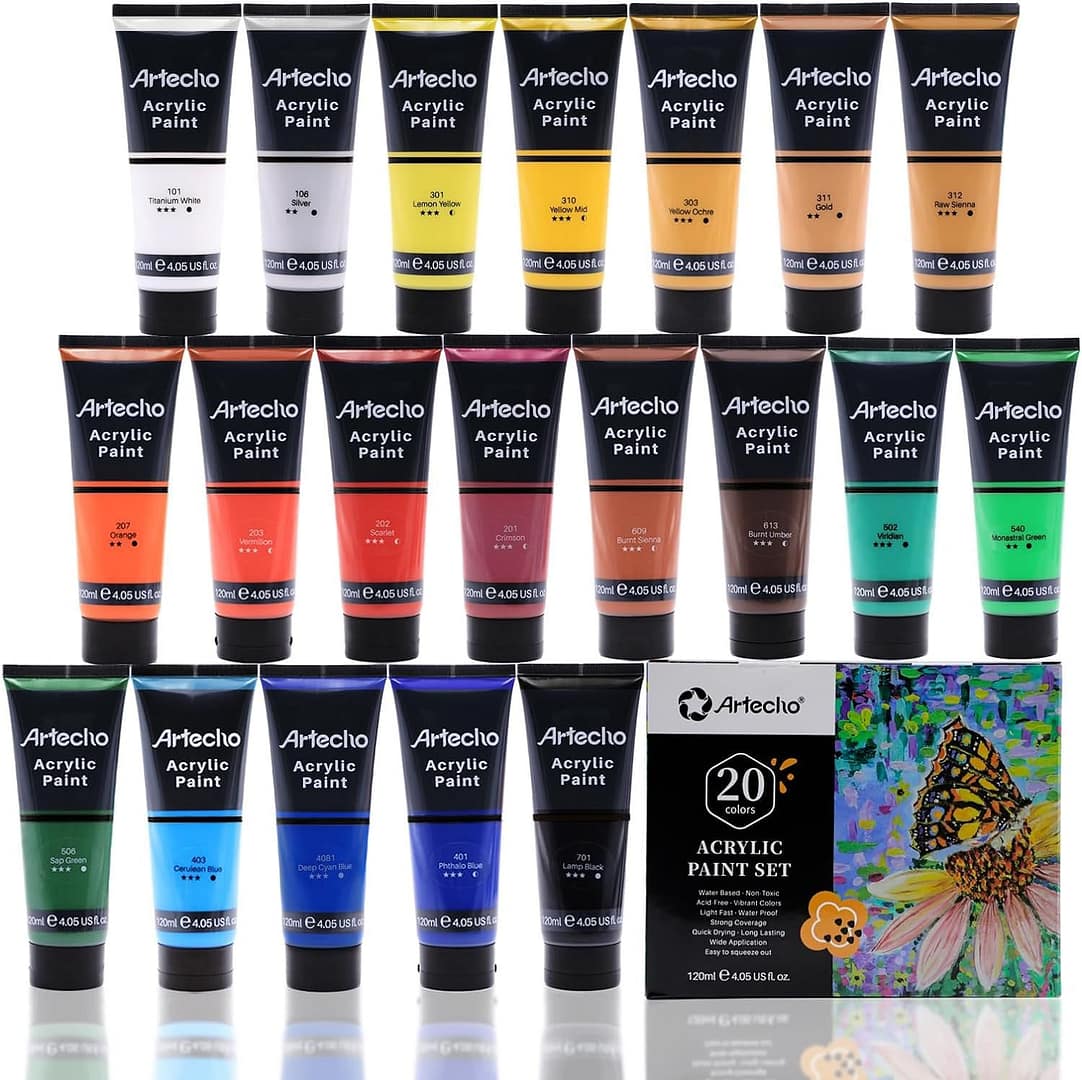
Value describes the relative lightness or darkness of a color.
Many beginners concentrate heavily on color while overlooking value.
This can cause paintings to appear flat.
A strong painting often depends more on accurate value relationships than on the exact hue.
Artists can simplify a subject into:
Light
Midtone
Shadow
This simplification makes complex subjects easier to understand.
A Painting Class often uses grayscale exercises because they help students focus on value without the distraction of color.
Suppose a portrait has beautiful colors but incorrect values. The face may still look unrealistic.
Conversely, a painting with limited color but strong value relationships can appear convincing.
This is why value studies are an important part of oil painting education.

Composition determines how visual elements are organized within the frame.
Even technically skilled painting can feel weak if the composition lacks structure.
The rule of thirds divides an image into nine sections.
Important subjects can be positioned near the intersections of these divisions.
It is a useful guideline, although artists do not need to follow it rigidly.
Every painting benefits from having areas of greater and lesser visual emphasis.
The focal point can be strengthened through:
Contrast
Detail
Saturation
Sharp edges
Bright values
Color temperature
A Painting Class can help students recognize where the viewer’s eye naturally travels.
Lines can direct attention.
They may be created by:
Roads
Branches
Buildings
Shadows
Arms
Architectural forms
Brushwork
Negative space refers to the areas around and between objects.
Beginners often focus only on the objects themselves.
Professional artists also observe the shapes of empty spaces.
This approach improves proportion and composition.
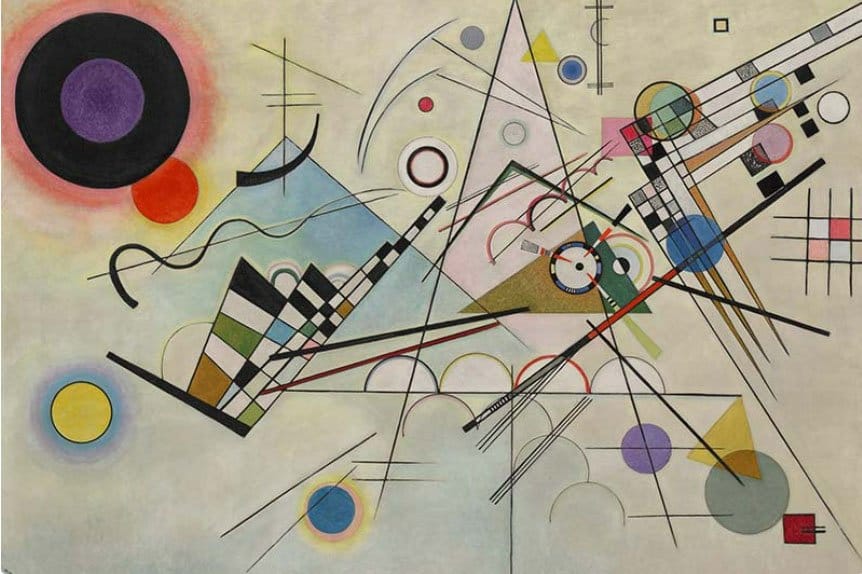
A flat canvas must create the illusion of three-dimensional space.
Artists use several techniques to achieve this.
Linear perspective uses lines and vanishing points to represent spatial depth.
Common systems include:
One-point perspective
Two-point perspective
Three-point perspective
A Painting Class can provide practical exercises for understanding these systems.
Objects generally appear less detailed and less contrasty as they move farther away.
Distant objects may also appear cooler or lighter depending on atmospheric conditions.
This technique is especially useful for landscapes.
Overlapping is one of the simplest ways to create depth.
When one object overlaps another, viewers naturally interpret one as being closer.
Objects generally appear smaller as they move farther away.
Accurate scale relationships are essential for convincing landscapes and architectural paintings.
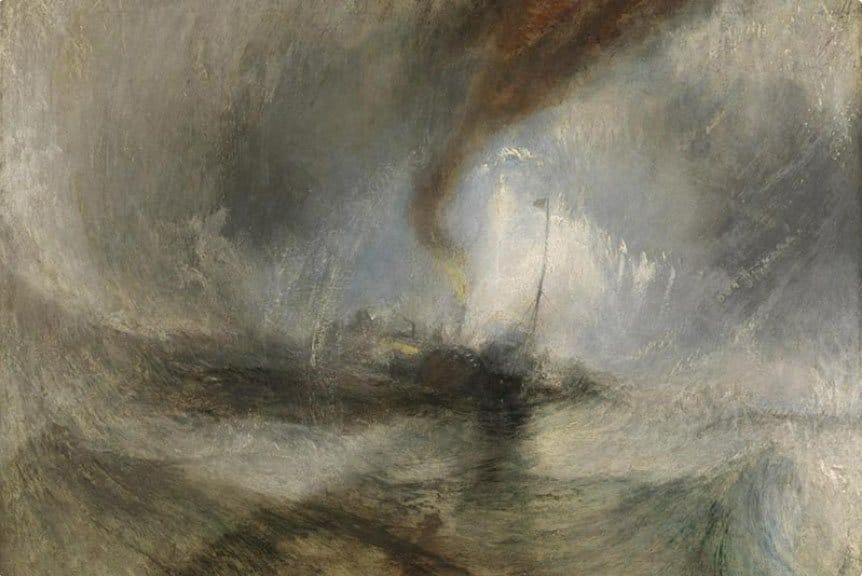
Light determines how viewers perceive form.
Without convincing light, even accurate drawings can appear flat.
Artists should identify the primary light source before painting.
The source may be:
Sunlight
Window light
Studio lighting
Candlelight
Artificial lighting
The direction of light determines the location of highlights and shadows.
Chiaroscuro refers to strong relationships between light and dark.
It can create dramatic volume and emotional intensity.
Artists can use this approach in portraiture, still life, and figurative painting.
Cast shadows are produced when an object blocks light.
Their shape and softness depend on:
Light size
Light distance
Object position
Surface
Environmental conditions
Shadow areas are rarely completely black.
Nearby surfaces can reflect light into shadows.
Observing reflected light helps artists create convincing three-dimensional forms.
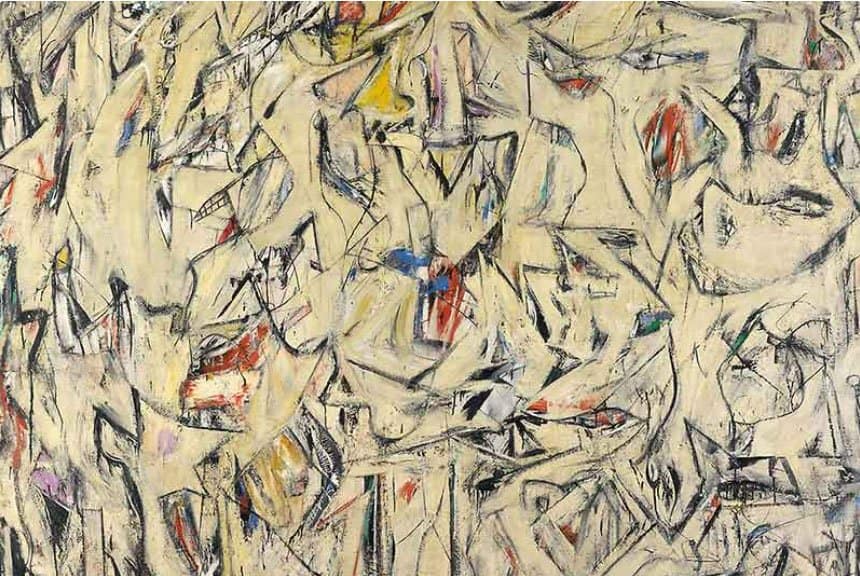
Different subjects require different approaches.
Portrait painting requires careful attention to proportion, anatomy, values, and subtle color shifts.
Students should first establish the large structure before concentrating on facial details.
Landscape artists must understand atmospheric perspective, changing light, natural color relationships, and simplified forms.
A Painting Class can teach students how to avoid painting every leaf and tree individually.
Still life is excellent for learning because objects can remain in a controlled position.
Students can study:
Light
Form
Texture
Reflections
Composition
Color relationships
Flowers combine organic shapes with complex color and texture.
Artists need to simplify the subject while preserving its character.
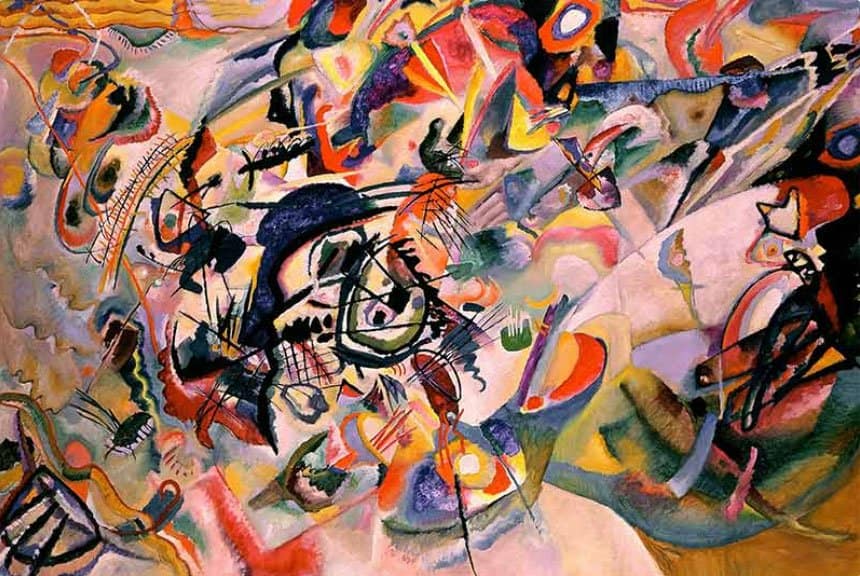
Texture can be visual or physical.
Artists can suggest texture through brushwork, color variation, value changes, and edge control.
Different surfaces require different strategies.
For example:
Glass requires reflections and transparency.
Metal requires strong value contrasts.
Fabric requires directional folds.
Skin requires subtle transitions.
Wood requires directional texture.
Stone requires irregular value and color variation.
A Painting Class can help students practice these differences through controlled studies.
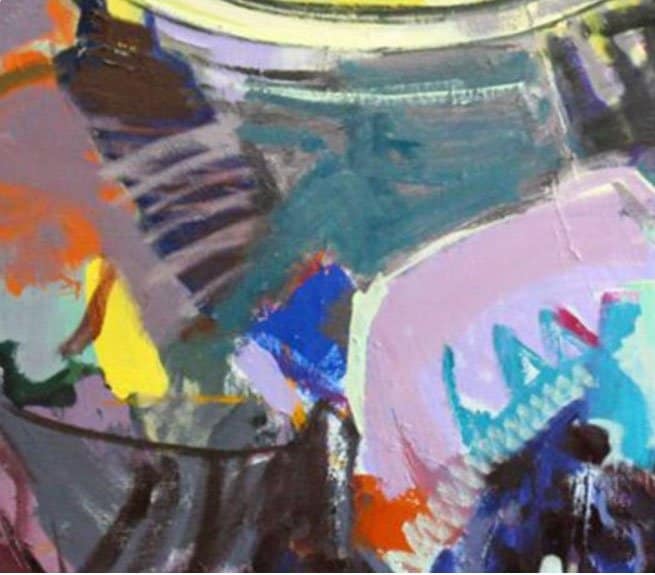
Brushwork is not simply a method of moving paint.
It can become part of the visual language of a painting.
Short strokes can create energy. Long strokes can suggest movement. Broken strokes can create texture.
Artists should learn to avoid using one brushstroke pattern everywhere.
Variation makes paintings more interesting.
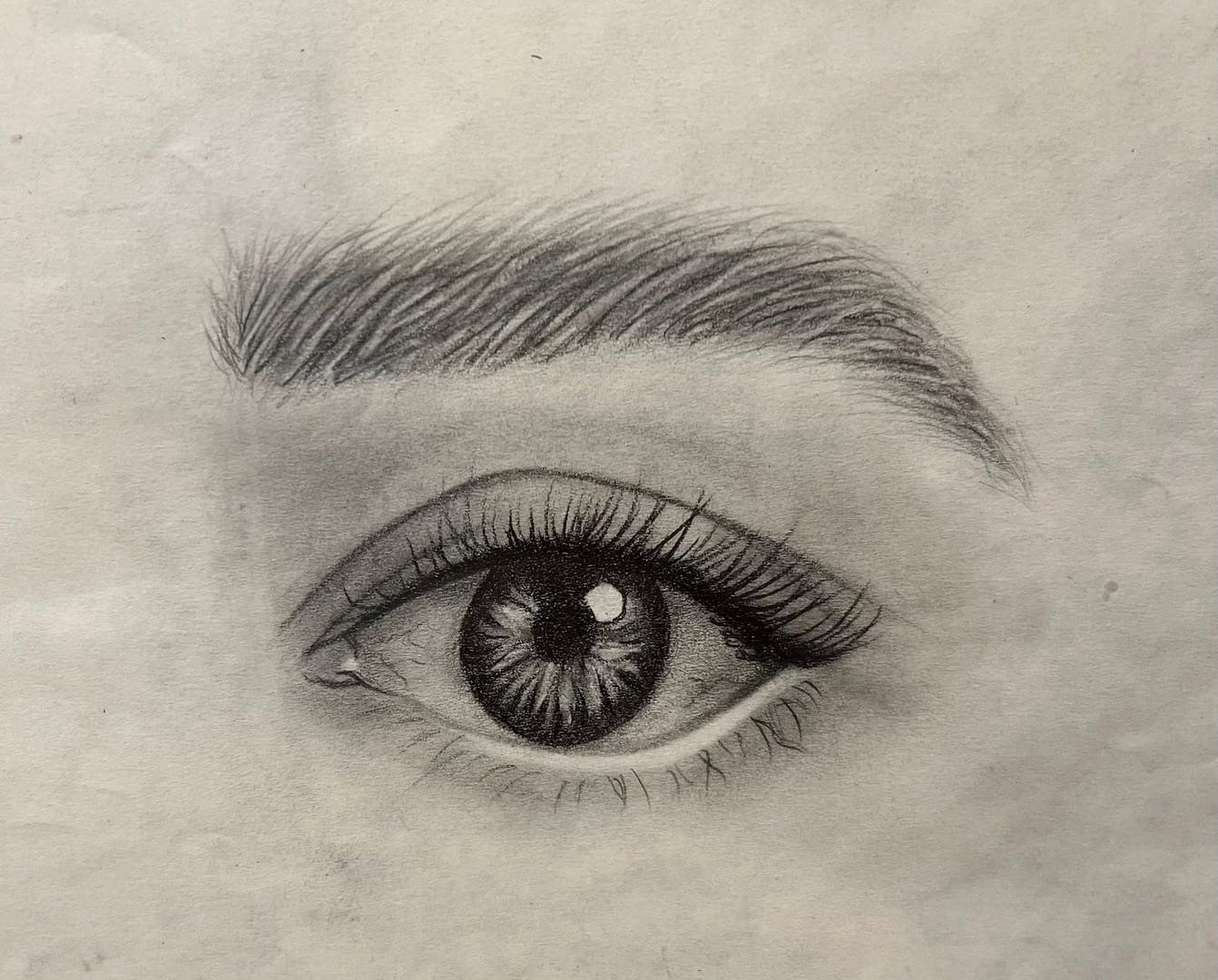
Every beginner makes mistakes.
The important skill is learning how to recognize and correct them.
Painting individual details too early can cause proportion problems.
Start with large shapes first.
Beginners often believe that more colors create better paintings.
In reality, a limited palette can produce more harmonious results.
Excessive blending can create muddy colors.
Allowing some brushwork to remain visible can produce greater clarity.
A painting can have beautiful colors but weak structure if the values are incorrect.
Black can be useful, but automatically darkening every shadow with black can reduce color richness.
Artists often benefit from mixing chromatic darks.
Not every area needs the same level of detail.
High detail can be concentrated near the focal point.
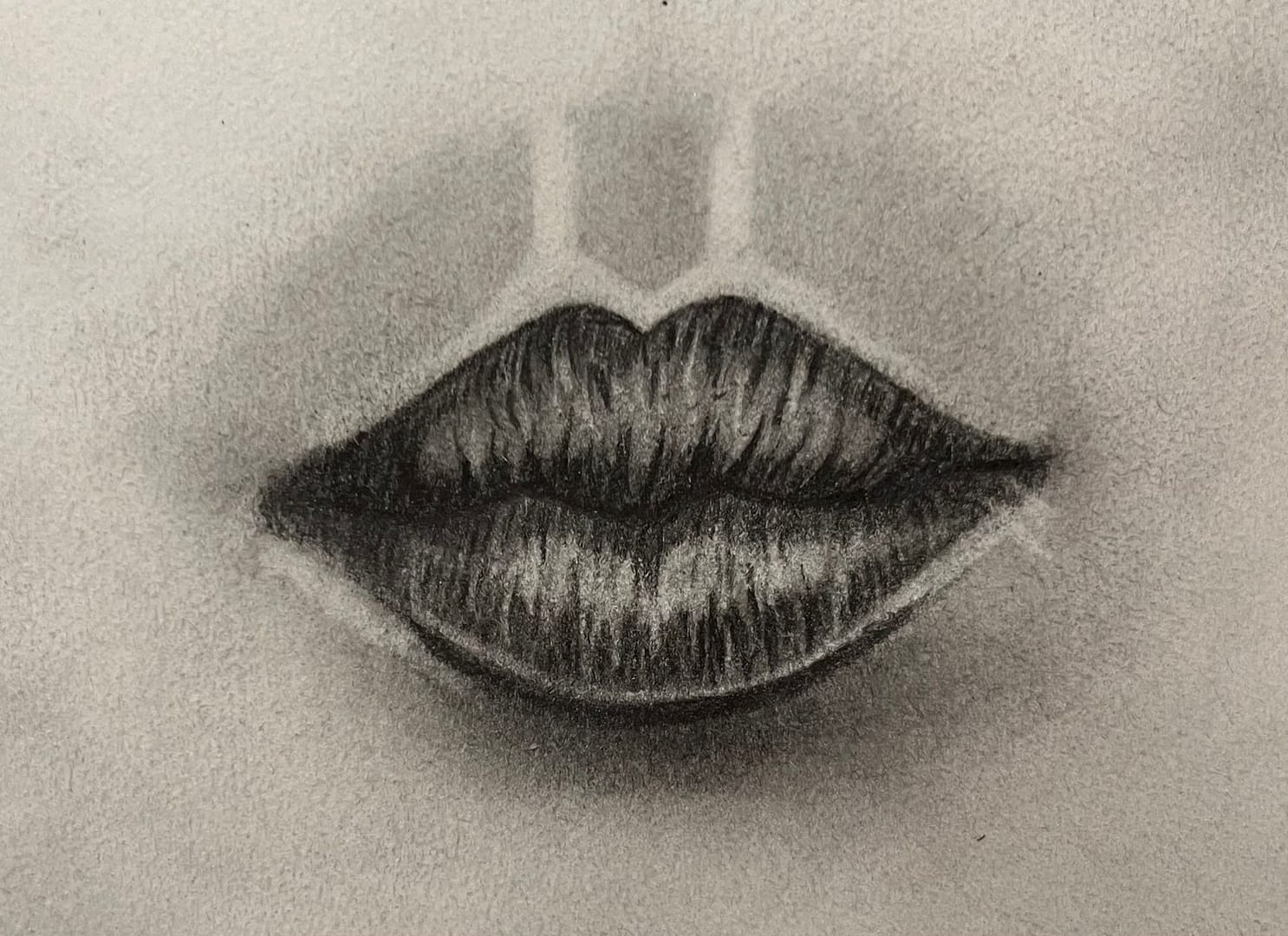
A consistent workflow improves efficiency.
A useful process might be:
Select a subject appropriate for your current skill level.
Analyze composition, values, colors, and lighting before touching the canvas.
A small sketch can help test the composition quickly.
Choose and prepare an appropriate painting surface.
Place the major proportions and shapes.
Establish the major light and dark masses.
Develop major color relationships.
Strengthen volume through value, temperature, and edge control.
Add detail selectively.
Step away from the canvas and assess the overall result.
Correct proportions, values, edges, and focal areas.
This structured process is one of the major advantages of learning through a Painting Class.

Self-teaching can be rewarding, but structured instruction can reduce unnecessary trial and error.
A Painting Class provides several advantages.
Students can watch techniques being performed in real time.
An instructor can identify problems before they become habits.
Exercises provide a clear progression from basic skills to advanced techniques.
Working alongside other artists creates opportunities for discussion and inspiration.
Students can observe different approaches to the same subject.
Progress becomes easier to recognize when students complete structured projects.

Not every class is designed for every student.
Before joining, consider:
Skill level
Painting style
Class size
Instructor experience
Materials included
Project structure
Class duration
Studio environment
Individual feedback
Cost
Location
Online or in-person format
Beginners may benefit from classes focused on fundamentals.
Intermediate artists may prefer technique-specific instruction.
Advanced artists may want critique-based sessions that focus on personal development.
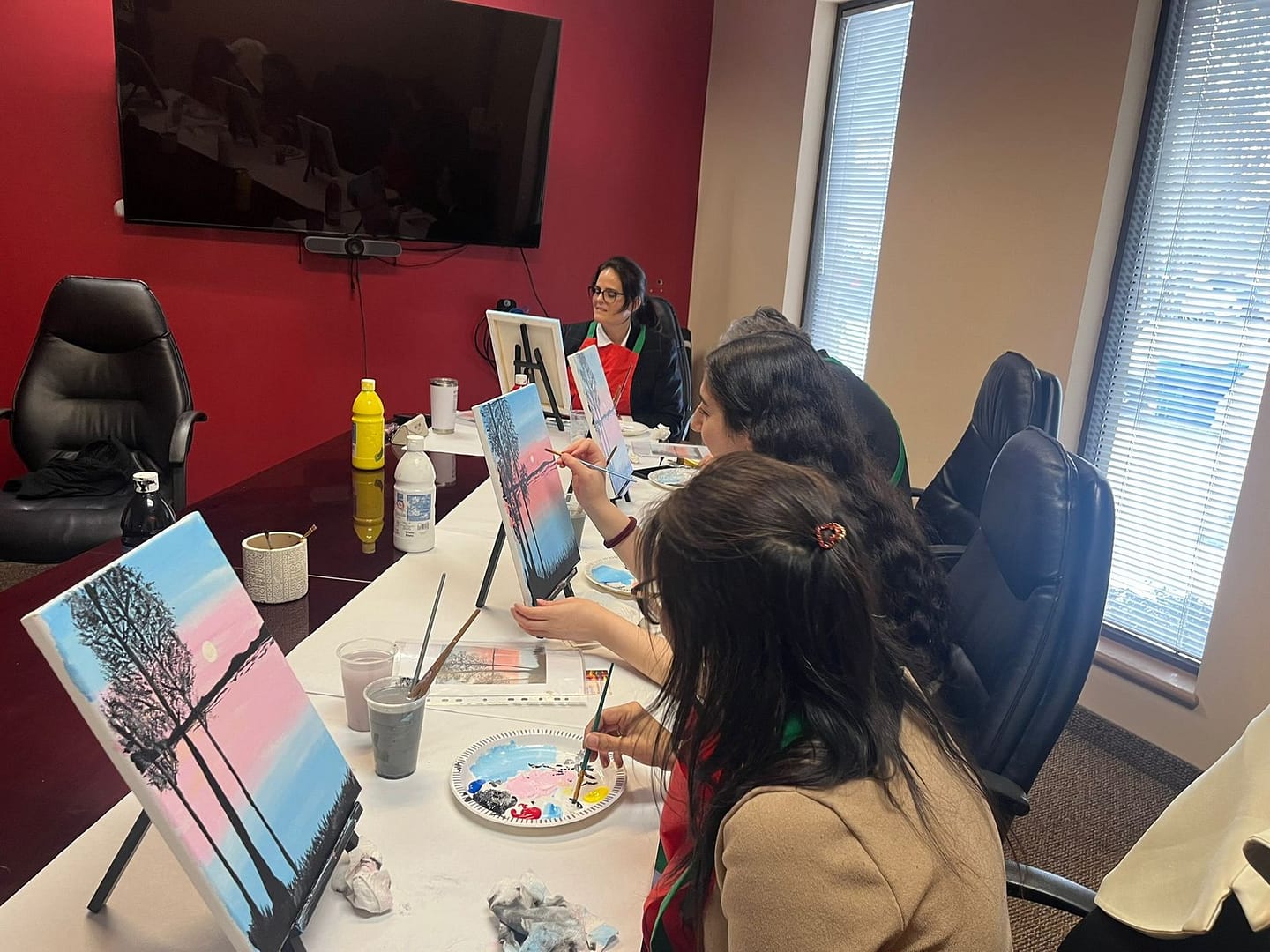
A beginner Painting Class normally focuses on foundational skills.
These can include:
Materials
Brush control
Basic color mixing
Value
Composition
Simple still life
Basic perspective
Advanced classes can explore:
Complex compositions
Portraiture
Advanced color relationships
Glazing
Sophisticated edge control
Atmospheric effects
Personal style
Portfolio development
The best learning path depends on the student’s existing experience.
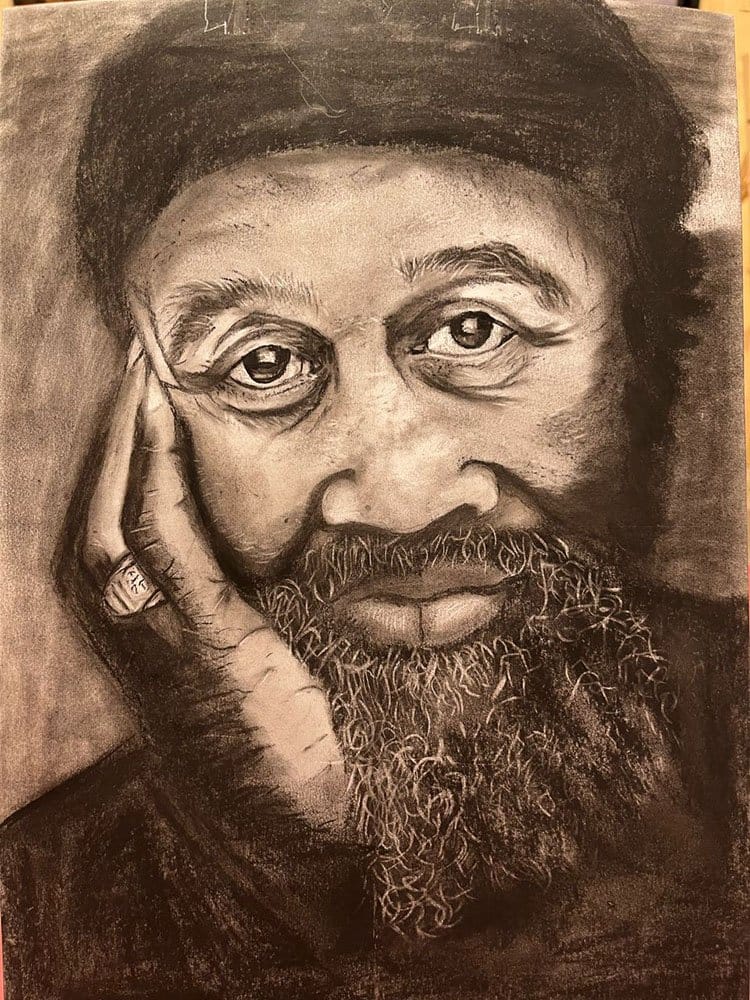
Progress requires consistency.
One long painting session every few months is less effective than regular practice.
Artists can create a simple routine.
For example:
Short color studies
Value exercises
Brushwork exercises
Still life studies
Landscape sketches
Portrait studies
Finished monthly paintings
A Painting Class can provide structure, but independent practice between sessions is equally important.
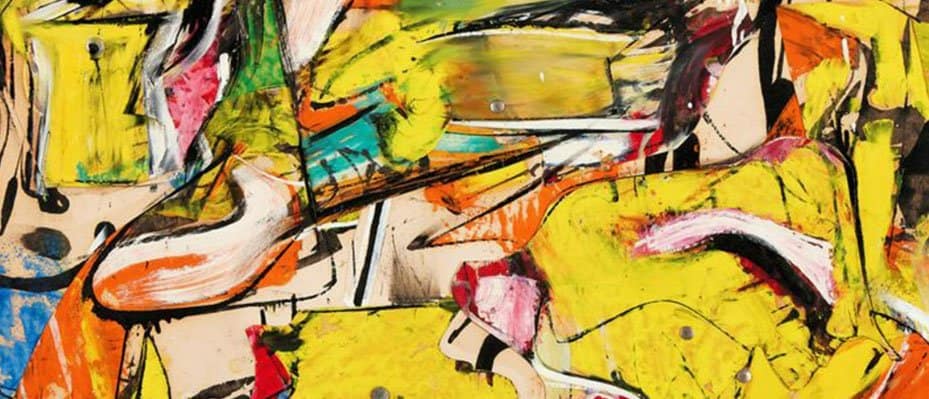
Style should not be forced too early.
It usually develops through repeated experimentation.
Artists can explore:
Different palettes
Brush sizes
Surface textures
Subject matter
Compositional approaches
Levels of detail
Painting techniques
Over time, preferences become visible.
A strong Painting Class should teach principles while still allowing students to develop their own artistic voice.
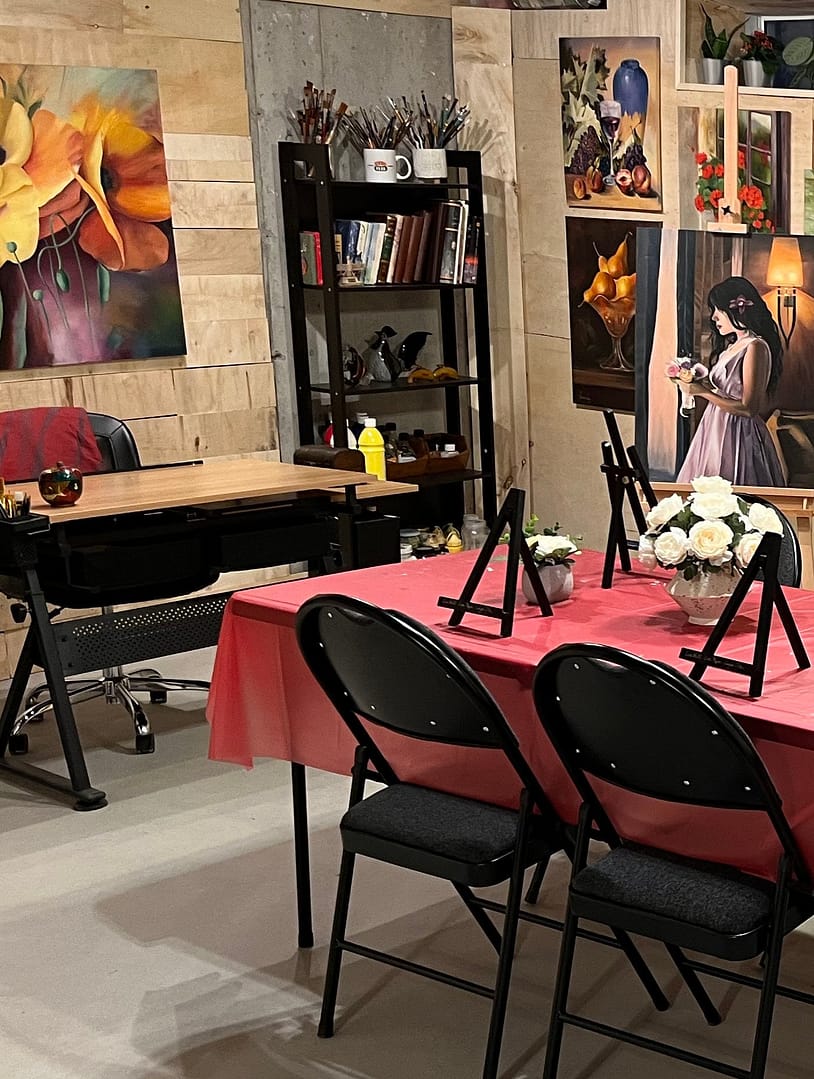
Learning does not end when the painting is finished.
Artists should evaluate their work objectively.
Ask:
Is the composition clear?
Is the focal point effective?
Are the values convincing?
Does the lighting make sense?
Are the colors harmonious?
Are the proportions accurate?
Are the edges varied?
Is there enough visual depth?
Does the painting communicate its intended mood?
Photographing the painting can also reveal problems that are difficult to notice while standing directly in front of the canvas.
Proper maintenance protects both materials and artwork.
Brushes should be cleaned carefully after use.
Palettes should be maintained regularly.
Paint tubes should be closed securely.
Solvents should be handled and stored appropriately.
Finished paintings should be allowed sufficient time to dry before further finishing steps.
A Painting Class should also introduce students to responsible studio habits.
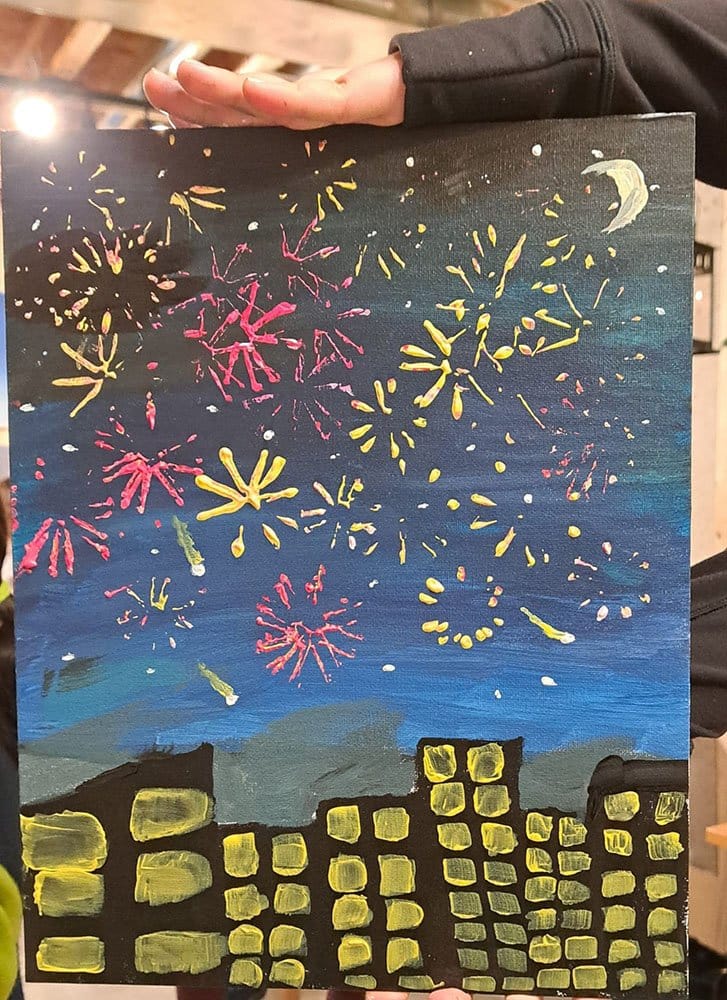
Safety is an important part of professional practice.
Artists should maintain good ventilation when using solvents or certain mediums.
Materials should be stored according to their labels.
Rags contaminated with drying oils require special care because improperly stored oily materials can present a fire risk.
Good studio habits protect both the artist and the workspace.

Mastering oil painting does not happen overnight.
The progression often looks something like this:
Beginner → Basic Control → Confident Mixing → Strong Values → Better Composition → Advanced Technique → Personal Style
Each stage builds upon the previous one.
A Painting Class can shorten the learning curve by providing demonstrations, assignments, corrections, and encouragement.
However, students should expect mistakes.
Mistakes are not evidence of failure. They are part of the process.

Oil painting rewards patience.
Artists must sometimes wait for layers to dry. They may need to repaint passages, adjust values, or reconsider a composition.
This slow process can become an advantage.
Instead of rushing toward completion, artists learn to observe carefully and make deliberate decisions.
The patience developed in a Painting Class can influence the quality of the finished artwork.

Technical knowledge is only one part of becoming an artist.
Eventually, students must decide what they want to communicate.
A technically accurate painting can still feel emotionally empty.
Conversely, an expressive painting can communicate powerful ideas through simplified forms and bold brushwork.
The goal is to combine technical control with artistic intention.
A comprehensive Painting Class should therefore encourage both discipline and experimentation.

Mastering oil painting is a lifelong journey. It combines observation, technical knowledge, experimentation, patience, and creative expression.
The most important skills begin with fundamentals. Artists need to understand materials, surfaces, color, value, composition, perspective, lighting, and brushwork. From there, they can explore advanced approaches such as glazing, scumbling, impasto, alla prima, and sophisticated edge control.
A structured Painting Class provides an environment where these skills can develop systematically. Students can watch demonstrations, practice techniques, receive feedback, learn from other artists, and gradually build confidence.
Whether your goal is to paint realistic portraits, expressive landscapes, dramatic still life compositions, or abstract works, oil painting offers remarkable creative possibilities.
The journey begins with a single brushstroke. With consistent practice and thoughtful instruction, that brushstroke can become part of a complete artistic language.
A well-designed Painting Class does more than teach students how to use oil paint. It teaches them how to observe, analyze, make artistic decisions, solve problems, and express ideas through color and form.
Ultimately, mastering oil painting is not simply about creating a technically perfect picture. It is about developing the ability to see the world differently and translate that vision onto a surface.
Start with the fundamentals. Practice consistently. Study the masters. Experiment with techniques. Learn from mistakes. Most importantly, continue painting.
Your artistic style develops with every canvas, every correction, and every brushstroke.