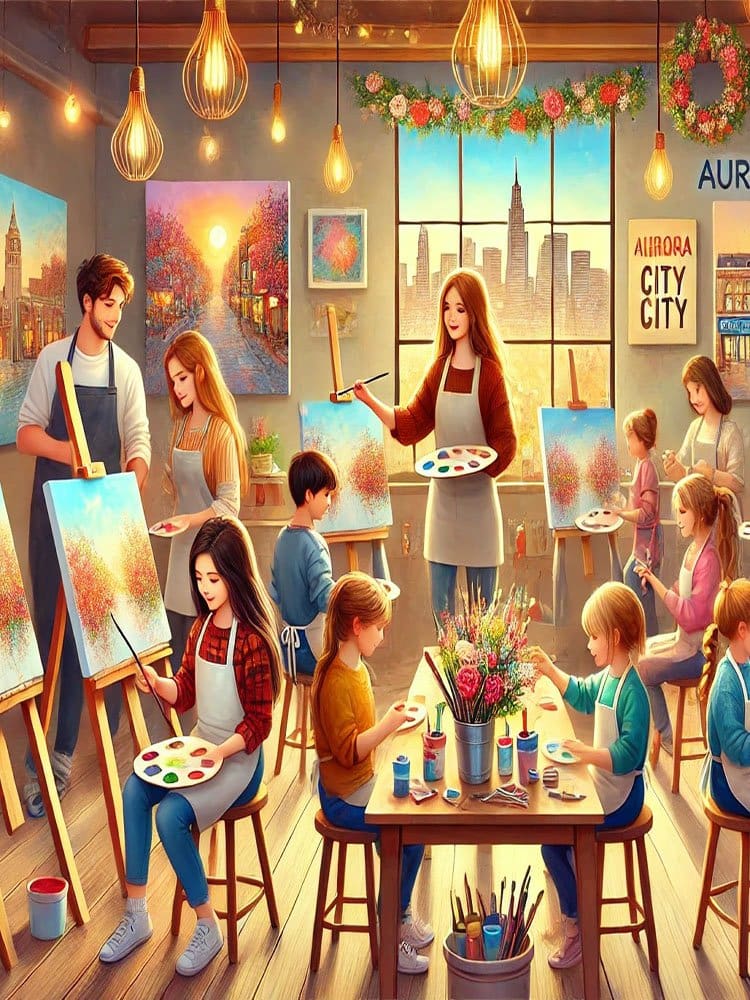

A painting class for adults offers a welcoming opportunity to explore creativity, regardless of previous artistic experience. These classes can help students develop painting skills while creating space for personal expression and creative exploration. Whether you are a beginner or an experienced artist, structured instruction can help you learn new techniques, experiment with different materials, and explore a variety of artistic styles. You can also learn more through our Painting Class programs.
Participating in a painting class for adults can also be a relaxing way to take a break from a busy routine. Focusing on colors, brushwork, and composition allows students to become more engaged in the creative process. Completing a painting can also provide a sense of accomplishment and encourage students to continue developing their artistic skills.
Painting classes also provide opportunities for social connection. Students can learn alongside others who share an interest in art and creativity. They can exchange ideas, discuss their work, and receive helpful feedback from instructors and classmates. This supportive environment can make the learning experience more enjoyable and motivating.
A painting class for adults in Aurora can open the door to many creative possibilities. Students can work at their own pace while discovering new techniques and developing their individual artistic style. Whether you want to learn the basics, improve your existing skills, or simply enjoy a creative activity, an adult painting class can be a rewarding way to spend time creating art.
A painting class for adults provides a welcoming opportunity to explore creativity and develop artistic skills. Whether you are picking up a brush for the first time or returning to painting after many years, a structured class can make the learning process enjoyable and accessible. Adult painting classes can introduce students to different techniques, materials, and styles while allowing them to develop their own artistic interests.
Unlike children’s art classes, adult painting classes often place greater emphasis on individual expression, skill development, and personal artistic goals. Some students may want to learn the basics, while others may be interested in improving existing skills or exploring a new creative hobby. A supportive class gives each student the opportunity to learn at a comfortable pace.
Painting can also provide valuable time away from busy daily routines. Focusing on colors, brushwork, and composition allows students to become absorbed in the creative process. For many adults, this dedicated time for creativity can be an enjoyable and relaxing part of their week.
Adults choose painting classes for many different reasons. Some want to learn a new skill, while others are looking for a creative activity that fits into their lifestyle. Painting can provide a welcome change from work, family responsibilities, and other everyday routines.
The hands-on nature of painting can also encourage focused attention. Mixing colors, working with different brushes, and planning a composition require students to remain engaged with what they are creating. This focused creative activity can make painting an enjoyable way to take a break from everyday distractions.
Another reason adults enjoy painting classes is the sense of accomplishment that comes with learning something new. Completing a painting or mastering a new technique can encourage students to continue practicing. Over time, they can build skills, confidence, and a stronger appreciation for their own creative abilities.
Creative activities can provide adults with an opportunity for self-expression and reflection. Painting offers a visual way to explore ideas, moods, memories, and personal experiences. Students can choose colors, subjects, and techniques that reflect their individual interests and creative perspectives.
A painting class can also provide dedicated time to focus on a meaningful activity. The process of working with paint and developing an image can be calming and enjoyable. For some people, this creative focus may help them feel more relaxed during the class.
However, regular painting classes should not be confused with professional art therapy. Art therapy is a specialized form of mental health care provided by qualified professionals. A painting class can support creativity and personal expression, but it is not a substitute for professional mental health treatment.
One of the most appealing aspects of adult painting classes is the opportunity to develop personal artistic freedom. Students can experiment with colors, techniques, subjects, and styles while learning the foundations of painting.
A good instructor provides structure without limiting creativity. Students may receive guidance on composition, color theory, perspective, brushwork, and materials. At the same time, they can make their own creative decisions and gradually develop an individual style.
This balance between instruction and freedom allows students to learn without feeling pressured to produce identical results. Even when several students follow the same lesson, each finished painting can be different. The process encourages experimentation and helps students discover what they enjoy about painting.
A painting class can also be a valuable social experience. Adults have the opportunity to meet people who share an interest in art while learning in a friendly studio environment. Conversations about techniques, materials, and creative ideas can make the experience more engaging.
Learning alongside other students can also provide encouragement. Participants can share ideas, discuss their work, and learn from different approaches to painting. Constructive feedback from instructors and classmates can introduce students to perspectives they may not have considered.
Whether attending alone or with a friend, an adult painting class can provide an opportunity to build connections through a shared interest in creativity. The social experience can become an important part of enjoying the class.
Many adults hesitate to start painting because they believe they are not artistic enough. This concern is especially common among beginners who compare their work with paintings created by experienced artists.
A supportive painting class can help students approach these concerns differently. Learning takes time, and mistakes are a normal part of developing artistic skills. Instructors can demonstrate techniques step by step and encourage students to experiment without expecting perfection.
As students practice and complete different projects, they may become more comfortable with their creative decisions. Seeing improvement over time can provide a sense of achievement and encourage them to continue learning.
The goal is not to create a perfect painting immediately. The goal is to learn, experiment, and gradually develop confidence through practice.
Adult painting classes can introduce students to a wide range of techniques and artistic skills. Depending on the class, students may work with acrylic paint, oil paint, watercolor, or other materials.
Beginner lessons may cover essential skills such as color mixing, brush control, layering, light and shadow, and basic composition. As students gain experience, they can explore more advanced concepts such as perspective, texture, proportion, and color relationships.
Some classes may also focus on specific subjects, including landscapes, still life, portraits, or abstract painting. This variety allows students to explore different approaches and discover the techniques that best suit their interests.
With regular practice and guidance, students can gradually develop a stronger understanding of painting materials and artistic principles.
Choosing the right painting class depends on your experience, goals, schedule, and preferred learning environment. Beginners may benefit from classes that provide step-by-step instruction and introduce fundamental techniques. More experienced artists may prefer lessons that offer greater freedom and opportunities for experimentation.
Class size is another factor to consider. Smaller classes can provide more opportunities for individual feedback and instructor guidance. The location and schedule are also important, especially for adults balancing painting with work, family, and other responsibilities.
It is helpful to consider what you want from the experience. You may want to learn a specific medium, improve your existing skills, explore a new hobby, or simply spend time creating art. The right painting class should provide a comfortable environment where you can learn, experiment, and develop your artistic abilities.
Painting can be an enjoyable way to create focused time for yourself. When working on a canvas, students often concentrate on details such as color, shape, brushwork, and composition. This creative focus can provide a welcome break from everyday responsibilities.
A painting class also gives adults a structured opportunity to spend time on a creative activity. Instead of trying to find time for painting alone, students can attend a scheduled lesson and work alongside an instructor and other artists.
The experience can be especially rewarding when students see their ideas gradually develop into finished artwork. The combination of learning, creativity, and focused activity makes painting an enjoyable addition to many adults’ routines.
Painting classes can create memorable experiences, especially when students participate with friends or family members. Working on artwork together provides an opportunity to share ideas, learn new techniques, and enjoy creative time in a relaxed setting.
Even students who attend alone can develop meaningful connections with classmates. Shared projects, conversations, and the experience of learning together can make the class more memorable.
Finished paintings can also become lasting reminders of the experience. Each artwork represents the techniques learned, the ideas explored, and the progress made during the creative journey.
Learning to paint can encourage qualities such as patience, curiosity, persistence, and creative thinking. Developing artistic skills rarely happens instantly. Students need time to practice techniques, evaluate their work, and try different approaches.
A painting class provides a structured environment for this process. Students can gradually discover their strengths and identify areas where they want to improve. Over time, this experience can encourage a greater willingness to experiment and learn from mistakes.
Art can also provide an opportunity for personal expression. Choosing a subject, selecting colors, and deciding how to approach a painting allows each student to make individual creative decisions.
Painting has played an important role in human culture for centuries. Artists have used it to document experiences, communicate ideas, explore identity, and reflect the world around them.
An adult painting class can introduce students to different artistic traditions, movements, and styles. Learning about historical and contemporary artists can provide inspiration and help students understand how painting has evolved across different cultures and periods.
Exploring art history can also influence the way students approach their own work. Studying different techniques and artistic traditions can encourage experimentation and broaden their understanding of what is possible with paint.
Learning to paint is an ongoing process. There is always another technique to explore, another subject to paint, or another style to discover. This makes painting suitable for adults who enjoy continuous learning and creative experimentation.
Each class can introduce a new challenge. Students may work with unfamiliar materials, explore a different composition, or try a technique they have never used before. These experiences can gradually expand their artistic knowledge.
There is no need to rush the process. Adults can develop their skills at their own pace while discovering what makes painting enjoyable and meaningful to them.
Creative blocks can affect artists at every skill level. Sometimes it can be difficult to choose a subject, develop an idea, or decide how to begin a new painting.
A structured painting class can help students move past these challenges. Instructors may introduce creative exercises, reference images, new techniques, or unfamiliar subjects to encourage experimentation.
Trying something different can also help students discover new sources of inspiration. A change in subject, color palette, technique, or painting style may lead to unexpected creative ideas.
The process of experimenting can make it easier to move beyond uncertainty and continue developing as an artist.
Painting provides an opportunity for adults to continue learning at any stage of life. There are always new materials, techniques, styles, and artistic ideas to explore.
A painting class creates a structured environment where students can learn from instructors, practice new skills, and receive feedback. As their experience grows, they can move from basic techniques to more advanced artistic concepts.
For many adults, painting can become a long-term creative interest. What begins as a beginner class may develop into a lasting hobby or a deeper commitment to artistic development.
Painting classes for adults can provide a rewarding combination of creativity, learning, self-expression, and social connection. Whether someone is a complete beginner or an experienced artist, a supportive class can provide opportunities to develop skills and explore new artistic possibilities.
For many adults, painting is also a way to make regular time for creativity. Learning new techniques, completing projects, and sharing the experience with other students can make each class meaningful and enjoyable.
Ultimately, the value of a painting class is not limited to the finished artwork. The learning process, creative exploration, personal expression, and connections formed along the way are all important parts of the experience. For adults in Aurora, joining a painting class can be a simple and rewarding way to continue learning, creating, and enjoying art.
A painting class for adults offers more than an opportunity to learn artistic techniques. It provides a welcoming environment where adults can explore creativity, practice new skills, and enjoy time away from their daily routines. Whether you are an experienced artist or a complete beginner, a supportive class can help you feel comfortable while discovering your own approach to painting.
Painting also provides many opportunities for creative exploration. Students can experiment with colors, brushwork, composition, and different painting mediums. Depending on the class, adults may work with acrylics, oils, watercolors, or other materials. This variety allows each student to discover techniques and styles that match their personal interests.
The social experience is another valuable part of adult painting classes. Students can meet others who share an interest in art, exchange ideas, and learn from different creative approaches. Working in a shared studio environment can make the experience more enjoyable while providing opportunities for conversation and encouragement.
Adult painting classes can also offer flexible ways to make time for creativity. Evening classes and weekend workshops can be convenient for people with busy work or family schedules. Having a regular class can make it easier to maintain a creative routine and continue developing artistic skills.
For adults looking for a rewarding creative hobby in Aurora, a painting class can be an enjoyable choice. It offers an opportunity to learn, experiment, connect with others, and create something unique while enjoying the process of making art.
Painting classes for adults have become an increasingly popular way to explore creativity and learn a new skill. Many adults are looking for activities that provide a break from busy routines while giving them an opportunity to create something meaningful. Painting offers a hands-on experience where students can focus on colors, shapes, brushwork, and composition.
These classes are accessible to people with different levels of experience. Beginners can learn fundamental techniques, while experienced artists can explore new approaches and refine their skills. With guidance from an instructor, students can experiment with different materials and develop their own creative style.
Whether offered as an evening activity or a weekend workshop, adult painting classes can provide an enjoyable opportunity to learn, create, and explore new artistic possibilities.
Painting can be an enjoyable way to create focused time away from everyday responsibilities. Concentrating on a canvas, choosing colors, and working through a composition can encourage students to become absorbed in the creative process.
For some adults, this focused activity can feel calming and refreshing. The process allows them to dedicate time to something creative without the usual demands of work or daily routines. Completing a painting can also provide a satisfying sense of accomplishment.
It is important to distinguish regular painting classes from professional art therapy. Painting can support creativity and self-expression, but a recreational art class is not a substitute for professional mental health care.
Painting classes can provide more than individual creative development. They can also create opportunities for adults to meet people with similar interests. Working in a shared studio environment encourages conversation, idea sharing, and interaction.
Students can discuss techniques, exchange creative ideas, and provide encouragement as they work on their projects. Seeing how other students approach the same subject can also introduce new perspectives and inspire experimentation.
For adults who enjoy learning in a group setting, the social atmosphere can become an important part of the overall experience. The shared interest in art can help create a welcoming and supportive community.
One of the greatest advantages of painting is the freedom to express individual ideas. Adults can experiment with colors, subjects, techniques, and styles while developing their own artistic preferences.
A painting does not need to communicate an idea in the same way that spoken or written language does. Colors, shapes, textures, and composition can all contribute to the way an artwork looks and feels. This gives students many opportunities to make personal creative choices.
A supportive class encourages experimentation without requiring every student to produce the same result. Trying an unfamiliar technique or making an unexpected creative decision can become an important part of learning.
The right painting class depends on your experience, interests, goals, and schedule. Beginners may prefer classes that introduce basic techniques through step-by-step instruction. More experienced artists may want opportunities to develop their skills and explore more advanced concepts.
The painting medium is another important consideration. Some classes focus on acrylic painting, while others specialize in oil painting or watercolor. Other programs may introduce students to several mediums.
It is also helpful to consider the class environment and teaching style. A good class should provide enough instruction to support learning while allowing students enough freedom to explore their own creative ideas.
Painting requires students to pay attention to many details. They may need to consider color relationships, proportions, brushwork, composition, and the placement of different elements on the canvas.
This process naturally encourages focused attention during a lesson. Students need to observe their work, make creative decisions, and adjust their approach as the painting develops.
Rather than promising specific cognitive improvements, it is more accurate to say that painting provides regular opportunities to practice observation, decision-making, concentration, and creative problem-solving.
Experimentation is an important part of learning to paint. Students can try different brushes, color combinations, techniques, surfaces, and styles to discover what works best for them.
Not every experiment will produce the expected result. However, unexpected results can provide useful information and encourage students to approach their work differently.
A supportive instructor can help students understand these experiences as part of the learning process. By trying new approaches and learning from mistakes, adults can gradually become more comfortable with creative experimentation.
Creative freedom works best when it is supported by a clear learning structure. A well-organized painting class can introduce techniques in a logical order while giving students opportunities to practice what they learn.
Instructors can demonstrate methods, explain artistic principles, and provide individual feedback. Students can then apply these ideas to their own paintings and gradually develop greater independence.
This combination of structure and creative freedom helps students understand the fundamentals while still allowing them to develop their personal artistic style.
A welcoming learning environment can make a significant difference, especially for adults who are new to painting. Some beginners may worry that they lack artistic ability or that their work will be judged.
A supportive classroom can help reduce these concerns. Clear demonstrations, constructive feedback, and encouragement allow students to focus on learning rather than comparing themselves with others.
When students feel comfortable experimenting, they may be more willing to try unfamiliar techniques and explore their creative ideas. A positive studio environment can therefore make the learning process more enjoyable.
Painting classes are available in many different formats, making it easier for adults to find an option that suits their needs. Local art studios, community programs, workshops, and online courses may offer different schedules and price points.
Short workshops can be a useful way to try painting without committing to a longer course. Regular classes may be better for adults who want to develop their skills gradually through continued practice.
The cost of painting also depends on the medium, class format, materials, and length of the program. Comparing different options can help students find a class that fits their interests and budget.
Painting does not always have to be an individual activity. When appropriate family-friendly programs are available, adults can enjoy creative experiences with children, partners, or other family members.
Working on artwork together provides an opportunity to spend quality time while each person explores their own ideas. Family members can encourage one another, share techniques, and appreciate each other’s creative approaches.
These shared experiences can also create memorable moments. A finished painting can serve as a reminder of the time spent learning and creating together.
Developing painting skills takes practice. Students often need to work through several stages before a painting reaches the result they have imagined. This process encourages patience and persistence.
Learning a new technique may require repeated attempts. Students can gradually improve by observing their results, identifying areas for improvement, and trying again.
Regular painting practice can therefore encourage a consistent approach to learning. The experience reminds students that artistic development is a gradual process rather than something that happens immediately.
Completing a painting can be an important milestone for students. Whether it is their first finished artwork or a more advanced project, seeing a painting reach completion provides an opportunity to recognize their progress.
Some painting programs may display student artwork in the studio, organize exhibitions, or provide opportunities for students to share their finished pieces. These experiences can make the learning process more rewarding.
Celebrating progress is not only about the final artwork. It is also about recognizing the techniques learned, the challenges overcome, and the creative decisions made throughout the process.
For adults, a painting class can therefore become a journey of learning, experimentation, creativity, and personal expression. Each completed project represents another step in developing artistic skills and discovering the enjoyment of making art.
Choosing the right painting class depends on your experience, interests, and artistic goals. Whether you are a complete beginner or an experienced artist, the right class can help you develop your skills while giving you room to explore your creativity.
For beginners, a structured class that introduces fundamental skills can be a good starting point. Lessons may cover color mixing, brushwork, composition, light and shadow, and basic painting techniques. Students can also explore different mediums, including acrylics, oils, and watercolors, to discover which one they enjoy most.
Adults with some painting experience may prefer intermediate or advanced classes. These programs can provide opportunities to refine existing techniques and explore specific artistic styles. Depending on the course, students may study realism, impressionism, abstract painting, portraiture, or landscape painting.
The learning environment is another important consideration. A supportive painting class should provide clear instruction while allowing students to make their own creative decisions. Feedback from an experienced instructor can help students understand their strengths and identify areas they would like to improve.
Some adults may also enjoy specialized painting experiences. Plein air classes allow students to paint outdoors and observe subjects directly. Life-drawing sessions can focus on proportions, movement, and the human form. Mixed-media classes can introduce additional materials and textures to create more varied artwork.
The ideal painting class should match your personal interests and learning preferences. Whether you prefer a traditional studio setting, an online lesson, or a specialized workshop, choosing a class that fits your goals can make learning to paint more enjoyable and rewarding.
Choosing the right painting class depends on your experience, interests, and artistic goals. Adults can choose from beginner courses, advanced workshops, online lessons, and classes focused on specific painting mediums or styles. Exploring these options can help you find a learning experience that fits your needs.
For adults who are new to painting, a beginner-friendly class offers a structured way to learn the fundamentals. Lessons often introduce color theory, brush control, composition, and basic painting techniques.
Students may work with acrylics, watercolors, or oils while learning how to create light, shadow, shape, and depth. Step-by-step exercises help beginners understand how colors and textures work together.
These classes are suitable for people who have never painted before or those who want to refresh their basic skills. A supportive learning environment can also help beginners become more comfortable with their creative choices.
With a combination of instruction and hands-on practice, students can gradually build a strong foundation and move toward more advanced techniques.
Adults with previous painting experience may prefer an intermediate or advanced class. These programs focus on improving technique, developing artistic confidence, and exploring more complex approaches.
Students may study techniques such as impasto, glazing, and sfumato. They can also explore composition, color mixing, brushwork, and different approaches to creating texture.
Some advanced classes include master studies. These exercises allow students to examine the techniques used by established artists and apply selected ideas to their own work.
Advanced programs may also focus on specific subjects, including portraiture, landscapes, realism, or abstract art. For experienced painters, these classes provide an opportunity to experiment, receive feedback, and continue developing a personal artistic style.
Adults can choose between online and in-person painting lessons based on their schedules, learning preferences, and goals.
An in-person class provides direct interaction with the instructor and other students. Participants can receive feedback during the lesson and work with paints, brushes, and canvases in a studio environment.
Online classes offer greater flexibility. Live virtual lessons and recorded tutorials allow students to learn from home and practice at their own pace. Some programs also provide downloadable resources and opportunities to share artwork with other students.
For adults with busy schedules, online learning can be convenient. Those who prefer direct instruction and a structured studio environment may enjoy in-person classes more.
Acrylic painting is a popular choice for both beginners and experienced artists. Acrylic paints dry relatively quickly, are water-soluble, and can be used with a wide range of techniques.
In an acrylic painting class, students may learn layering, blending, glazing, color mixing, and palette knife techniques. They can also experiment with texture and different brushwork.
Acrylics work well for many styles, including realism, abstract art, and expressive painting. Their relatively easy cleanup also makes them a practical choice for many adult learners.
For those who enjoy vibrant colors and flexible techniques, acrylic painting provides plenty of opportunities for creative exploration.
Oil painting is a traditional medium known for its rich color and smooth blending. Its slower drying time gives artists more opportunity to adjust colors and refine details.
In an oil painting class, students may learn techniques such as underpainting, glazing, and wet-on-wet painting. These methods can help create subtle transitions, depth, and layered effects.
Students can also learn how to handle painting materials responsibly, including pigments, brushes, mediums, and solvents where applicable.
Oil painting can be especially appealing to adults who enjoy detailed work and want to spend more time developing each layer of a composition.
Watercolor is known for its transparency, fluidity, and luminous appearance. A watercolor class introduces students to techniques that take advantage of the unique behavior of water and pigment.
Common techniques include wet-on-wet, dry brush, layering, and glazing. Students learn to balance careful planning with the natural flow of the medium.
Watercolor is often used for landscapes, flowers, illustrations, and expressive studies. Because changes can sometimes be difficult to correct, the medium encourages careful observation and thoughtful application.
For adults who enjoy light, expressive, and impressionistic artwork, watercolor can be an engaging medium to explore.
Abstract painting classes encourage adults to explore color, shape, texture, and movement without relying on realistic representation.
Instead of focusing on accurately reproducing a specific subject, students can experiment with composition and personal expression. Lessons may include color relationships, gestural brushwork, texture, and mixed-media techniques.
This type of class can be a good choice for adults who want to experiment and develop their own approach to painting.
Portrait painting classes focus on the challenge of representing the human face and figure. Students may study proportion, facial structure, lighting, skin tones, and expressive details.
Life drawing can complement portrait studies by helping students develop a better understanding of proportion, anatomy, gesture, and form.
These classes are particularly useful for adults who want to improve their ability to create realistic portraits and figure-based artwork.
A plein air painting class gives adults the opportunity to paint outdoors while observing landscapes in natural light.
Working outside allows students to study changing light, color, atmosphere, and perspective directly from their surroundings. It also encourages artists to make quick observations and practical decisions while developing a composition.
For adults who enjoy nature and outdoor activities, plein air painting can provide a refreshing alternative to a traditional studio setting.

Painting classes offer adult women an opportunity to explore creativity, learn new skills, and enjoy meaningful time away from daily routines. Whether you are a beginner or an experienced artist, the right class can provide a supportive environment for artistic exploration and self-expression.
A well-structured class introduces students to essential techniques such as brushwork, color theory, and composition. Some programs focus on specific mediums, including acrylics, oils, or watercolors. Others encourage students to experiment with mixed media, textures, and different creative materials.
For women looking for a relaxing creative activity, painting can provide a focused and enjoyable experience. Working with color, brushstrokes, and composition allows students to concentrate on the creative process. Some classes also create opportunities for conversation and social connection in a comfortable studio environment.
Specialized workshops can help students explore subjects such as portraits, landscapes, or abstract compositions. Experienced instructors provide guidance throughout the process and offer practical feedback. This approach helps students improve their techniques while developing their own artistic preferences.
Painting classes designed for adult women can suit many different goals. Some participants may want to enjoy painting as a hobby, while others may want to develop their skills more seriously. Regardless of experience level, a welcoming class can make learning more enjoyable and encourage continued creative exploration.
Painting offers adult women many ways to explore creativity, learn new skills, and enjoy time away from daily routines. Whether you are interested in learning the basics, exploring a specific medium, or painting in a social setting, there are many options to consider.
For women who are new to painting, a beginner-friendly class provides a comfortable introduction to the fundamentals. Lessons may cover brush control, color mixing, composition, and basic painting techniques.
Instructors guide students through simple exercises and projects. Working with different mediums, such as acrylics, watercolors, and oils, also helps beginners discover which materials they enjoy.
A supportive learning environment allows students to build confidence gradually. Each completed project can provide a sense of progress and encourage continued artistic exploration.
Some women choose painting as a relaxing activity and a way to enjoy focused creative time. These classes place less emphasis on perfection and more emphasis on enjoying the process.
A comfortable studio, gentle instruction, and simple creative exercises can make the experience enjoyable. Students can experiment with colors and brushstrokes while taking a break from their usual routines.
These classes are recreational rather than professional art therapy. They can provide an enjoyable creative experience without requiring students to have previous artistic experience.
Acrylic painting is a popular option for women who enjoy vibrant colors and flexible techniques. Acrylics dry relatively quickly and can be used for layering, blending, texture, and detailed work.
Students may explore techniques such as impasto, dry brushing, and glazing. The medium works well for many styles, from realistic landscapes to expressive abstract compositions.
Oil painting appeals to women who appreciate rich colors, smooth blending, and traditional painting techniques. Because oil paint dries slowly, artists have more time to blend colors and refine details.
Lessons may introduce techniques such as underpainting, glazing, and chiaroscuro. Students can also learn how to work with oil painting materials safely and effectively.
For those interested in classical techniques or detailed artwork, oil painting can offer a rewarding and immersive experience.
Watercolor is an excellent choice for women who enjoy delicate colors and expressive compositions. Its transparent quality creates a distinctive appearance that works particularly well for landscapes, flowers, and nature-inspired subjects.
Students can learn techniques such as wet-on-wet painting, dry brushing, and graded washes. These exercises help them understand transparency, water control, and color layering.
Watercolor also leaves room for spontaneity, making each painting a unique exploration of color and movement.
Abstract painting allows women to experiment with color, shape, texture, and movement without focusing on realistic representation.
Students may explore gestural brushwork, color relationships, layering, and texture. Instead of following a single visual formula, they can make creative decisions based on their own ideas and preferences.
This type of class is well suited to women who want to experiment and develop a more personal approach to painting.
Portrait painting introduces students to the challenge of representing facial features, proportions, expressions, and skin tones.
Lessons may focus on observation, lighting, facial structure, and color mixing. Life-drawing exercises can also help students develop a better understanding of anatomy and proportion.
For women interested in realistic artwork, portrait painting offers an opportunity to develop both technical and observational skills.
Floral painting focuses on flowers, leaves, and botanical arrangements. Women who enjoy nature and decorative artwork may find this style particularly appealing.
Depending on the medium, students can learn to represent petals, leaves, color variations, and natural textures. Still-life arrangements can also help students practice composition and observation.
Floral painting provides plenty of opportunities for both careful study and personal interpretation.
Plein air painting takes the creative process outdoors. Students paint directly from their surroundings while observing natural light, color, perspective, and atmosphere.
Working outside presents a different set of challenges from studio painting. Light and weather can change quickly, encouraging artists to make decisions as they work.
For women who enjoy nature and outdoor activities, plein air painting can offer a refreshing and dynamic creative experience.
Still life painting focuses on objects arranged within a carefully planned composition. Common subjects include fruit, flowers, ceramics, books, and textiles.
Students can practice observation while learning about lighting, perspective, proportion, color, and texture. The controlled setting allows them to study each object carefully.
For women who enjoy detailed work, still life painting provides a structured way to strengthen fundamental artistic skills.
Mixed media painting combines paint with other artistic materials and techniques. Students may work with collage elements, pastels, paper, textured materials, or other creative surfaces.
This approach encourages experimentation and allows artists to create artwork with different layers, textures, and visual effects.
For women who prefer an unconventional approach to art, mixed media provides plenty of opportunities for creative discovery.
Social painting classes combine creativity with a relaxed group experience. They can be a fun option for women who want to paint with friends, meet other creative people, or simply enjoy a shared activity.
These sessions often place more emphasis on enjoyment and participation than on technical perfection. Students can follow an instructor, exchange ideas, and enjoy the process together.
Social painting events are especially suitable for women looking for a recreational art experience in a friendly and welcoming environment.
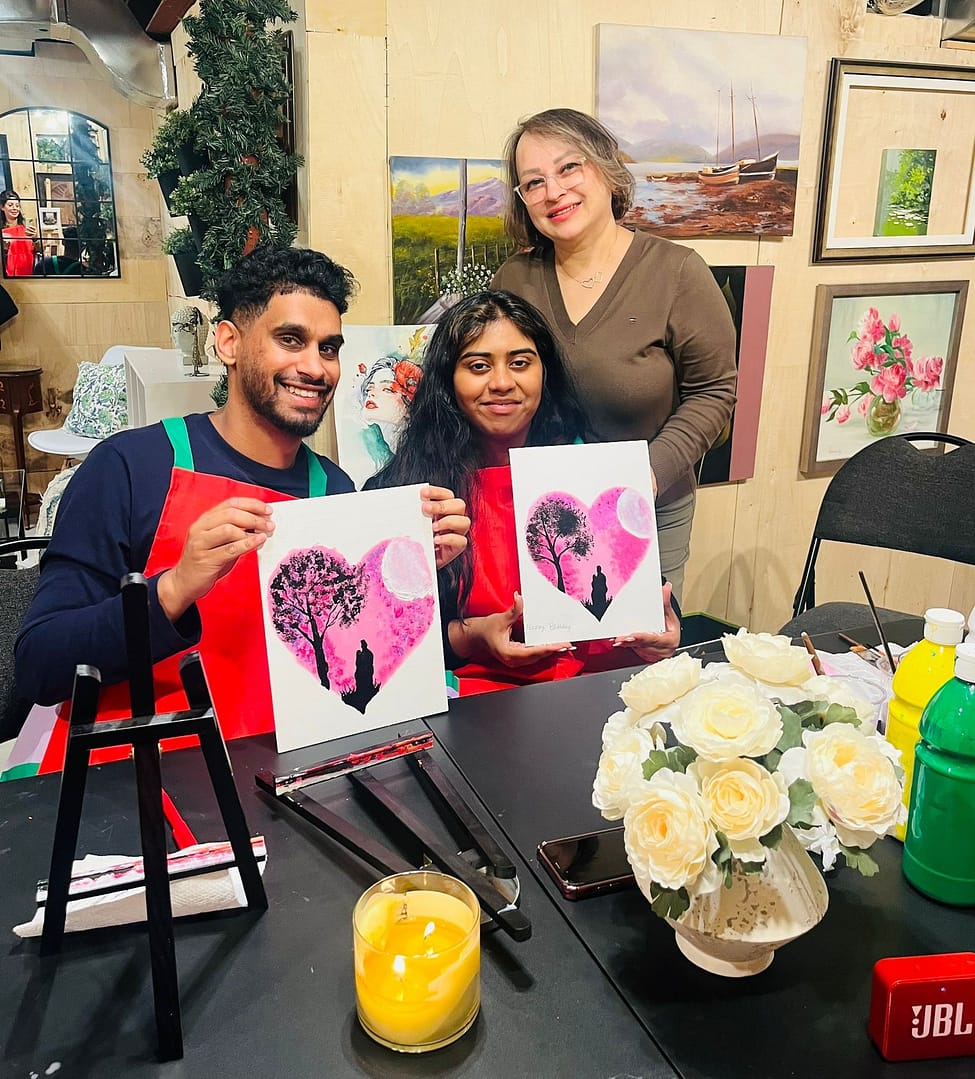
The combination of artificial intelligence and visual art is creating new opportunities for creative exploration. An AI painting class gives adults a chance to discover how digital tools can support traditional painting skills and creative ideas. Whether you are a beginner or an experienced artist, AI can add a new dimension to the learning process.
In an AI-enhanced painting class, students can explore a wide range of artistic styles, from realistic landscapes to abstract compositions. AI tools can help with idea generation, color exploration, reference images, and composition planning. These tools can provide inspiration while students continue to make their own creative decisions.
AI can also be useful when an artist is unsure how to begin a project. Digital tools can help generate visual concepts, suggest different approaches, or provide references for further exploration. Students can then use these ideas as starting points for their own artwork.
The goal of using AI in an art class is not to replace traditional painting skills. Instead, it can complement hands-on practice with brushes, paints, and canvas. Students still benefit from learning about color, composition, perspective, texture, and other fundamental principles of painting.
AI-supported learning can also make experimentation more accessible. Adults who are curious about technology and art can explore new ideas without feeling limited to a single artistic approach. The combination of human creativity and digital tools encourages students to compare possibilities and develop their own visual style.
An AI painting class can therefore bring together traditional art education and modern technology. By using AI as a creative assistant rather than a replacement for the artist, adults can explore new ideas while continuing to develop practical painting skills.
Technology is creating new possibilities for learning and creating art. AI-powered painting classes combine traditional painting skills with modern digital tools. This approach allows adults to explore creative ideas while learning how technology can support the artistic process.
AI tools can assist with idea generation, reference images, color exploration, and composition planning. These resources can be useful for both beginners and experienced artists who want to experiment with different approaches.
An AI-enhanced painting class does not replace traditional instruction. Instead, it adds another layer to the learning experience. Students can continue practicing brushwork, color theory, composition, and other fundamental skills while using digital tools for inspiration and experimentation.
The combination of traditional art and AI creates opportunities for adults to explore new creative directions. It also introduces students to technologies that are becoming increasingly relevant in the contemporary art world.
Traditional painting classes teach essential skills such as brushwork, color theory, composition, and the use of different painting mediums. AI can complement these lessons by providing additional references and creative possibilities.
For example, AI tools can help students explore different color combinations or compare possible compositions before starting a painting. These ideas can serve as references rather than fixed instructions.
AI can also help students visualize alternative approaches to a project. An artist might explore different lighting, backgrounds, or color palettes before deciding which direction to pursue.
However, hands-on practice remains essential. Working directly with brushes, paint, and canvas teaches skills that digital tools cannot fully replace. The most useful approach combines technology with practical artistic experience.
AI introduces new ways for artists to explore ideas and experiment with visual concepts. Digital tools can generate references, explore color combinations, and present different interpretations of a subject.
Adults attending an AI-focused art class can use these resources as starting points for their own work. They can compare different possibilities and decide which ideas fit their artistic vision.
This process encourages experimentation while keeping the artist at the center of the creative decision-making. AI can suggest possibilities, but the student determines how those ideas are interpreted and developed.
By combining human creativity with digital technology, students can explore approaches that may not arise from traditional methods alone.
One advantage of digital art tools is their flexibility. Adults can use many AI resources outside the classroom to explore ideas, collect references, and prepare for painting projects.
This can be particularly useful for students with busy schedules. Digital resources can support learning between classes and provide additional material for independent practice.
Online AI-assisted art lessons can also make certain educational resources available from home. Depending on the program, students may use video lessons, digital demonstrations, reference materials, and creative exercises.
AI does not remove the value of traditional studio instruction. Instead, it can provide another way for adults to continue exploring art beyond the classroom.
AI tools can provide suggestions that help students explore different possibilities in their artwork. For example, an artist may use digital tools to compare color palettes, investigate composition ideas, or find visual references for a project.
This can support individual learning because students can explore subjects that match their interests. A beginner might use AI to generate simple reference ideas, while an experienced painter may use it to explore more complex compositions.
The instructor remains an important part of the learning process. Personal feedback from an experienced teacher can address practical details such as brush handling, paint application, composition, and technique.
Combining instructor guidance with digital resources can give adults more opportunities to practice and experiment.
Artists sometimes have difficulty deciding what to paint or how to develop an idea. AI can be useful as a source of inspiration when students experience a creative block.
A student can use AI to explore possible subjects, color combinations, compositions, or visual themes. These suggestions can provide a starting point for a new project.
AI-generated ideas do not need to become the final artwork. Instead, they can stimulate new directions and encourage students to make their own creative decisions.
For adults returning to painting after a long break, this type of inspiration can make it easier to begin experimenting again.
AI tools can expose students to a wide variety of visual approaches. Artists can explore different compositions, color treatments, and artistic concepts before deciding how they want to develop their own work.
Students can also study the characteristics of different art movements and techniques. When discussing famous artists, it is more useful to examine their general artistic approaches rather than simply trying to reproduce a specific artist’s work.
AI can also support experimentation with digital painting and mixed-media concepts. These possibilities can complement traditional methods and encourage students to think more broadly about visual art.
The goal is not to copy an existing style but to learn from different approaches and develop an individual artistic direction.
Trying something new can sometimes make adults feel uncertain about their artistic abilities. AI tools can provide a low-pressure way to explore ideas before committing them to canvas.
Students can compare different possibilities and use digital references during the planning stage. This can make experimentation feel more approachable.
At the same time, artistic confidence develops through practice. Making creative decisions, learning from mistakes, and completing paintings are important parts of becoming more independent as an artist.
AI can support this process, but the student’s own choices, practice, and experience remain central to artistic development.
AI is likely to continue influencing art education as digital tools become more sophisticated. Future applications may offer new ways to combine physical painting with digital visualization, augmented reality, and other interactive technologies.
These developments could provide artists with additional ways to plan compositions, explore references, and experiment with creative concepts.
However, technology will not eliminate the importance of fundamental artistic skills. Understanding color, composition, perspective, materials, and brushwork will remain valuable for artists working with traditional media.
The future of AI in painting education is therefore likely to focus on collaboration between artists, instructors, and digital tools.
AI-powered painting classes offer adults a modern way to combine traditional art education with digital creativity. AI tools can support idea generation, reference gathering, color exploration, and experimentation.
The technology is most valuable when used as a creative assistant rather than a replacement for the artist or instructor. Hands-on painting practice remains essential for developing technical skills and understanding artistic materials.
For adults in Aurora who are interested in both art and technology, AI-assisted painting can provide an engaging opportunity to explore new ideas. By combining human creativity with modern tools, students can continue developing their skills while discovering new possibilities in the world of art.